CALMAG
Benchmark Library
Controlled comparisons across isolated instruments, rhythmic loops, and full mixes. Each benchmark uses the same chain: −14 dB input trim → CALMAG → LUFS match.
Method
Consistent Test Chain
Each source is processed through the same calibrated benchmark path. The goal is to compare behavior across different signal types without changing the basic evaluation method.
Processing chain:
Input Audio → −14 dB Input Trim → CALMAG → LUFS Matching → Envelope Overlay / Envelope Difference / Spectrogram Comparison
Benchmark audio is served from the Acamposoft public listening bucket. Each pair uses the exact Dry level-reference WAV and CALMAG −14 dB LUFS-matched WAV generated during the current benchmark pass.
Slap Bass
Natural decay and body persistence.
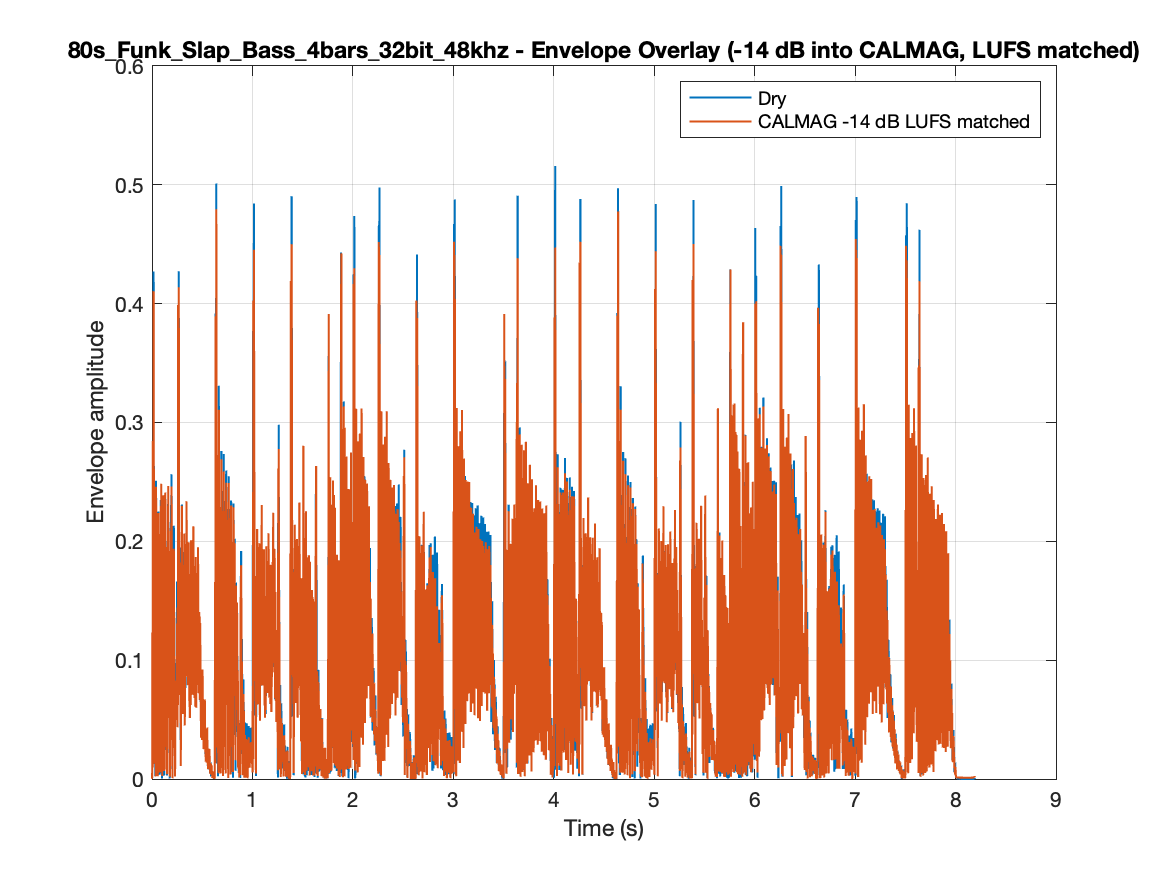
Envelope overlay showing preserved slap articulation while CALMAG adds measurable body through the post-transient decay region.
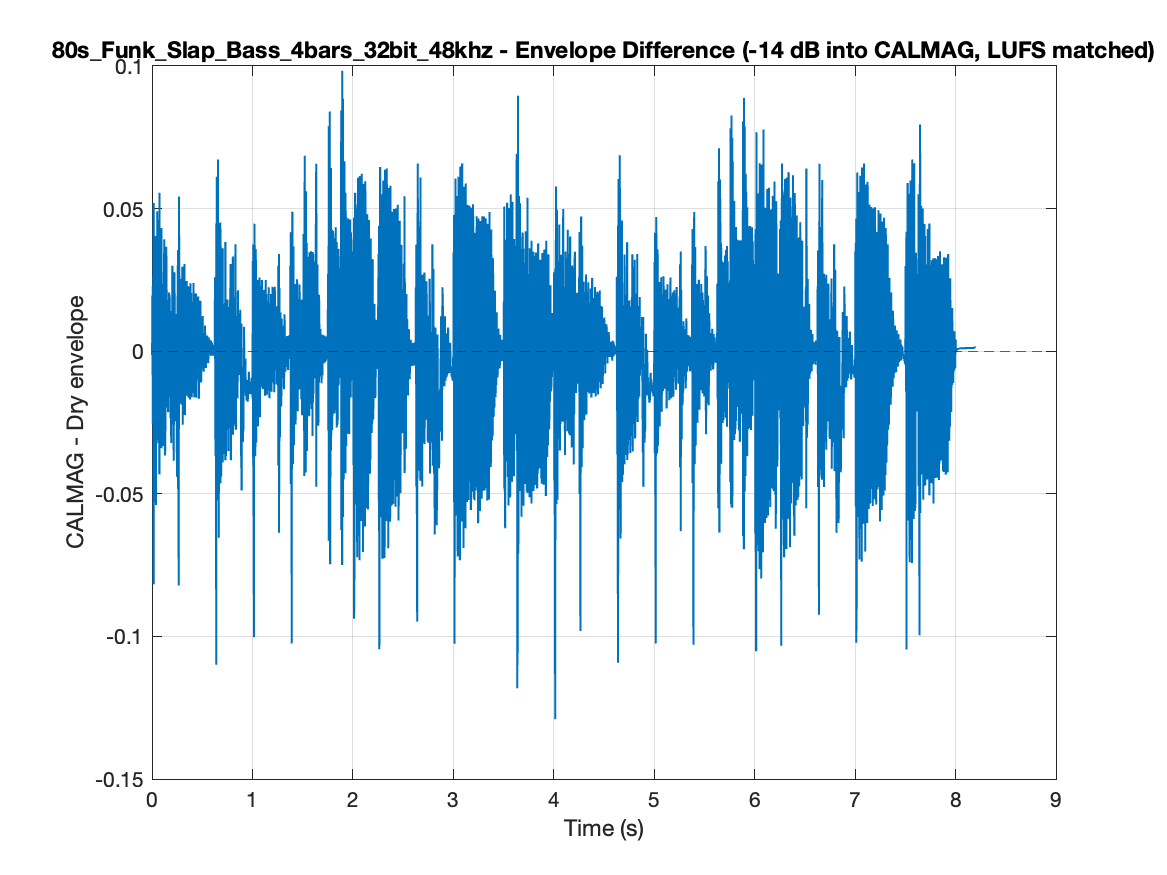
Envelope difference showing bounded redistribution around note events rather than a uniform static level shift.
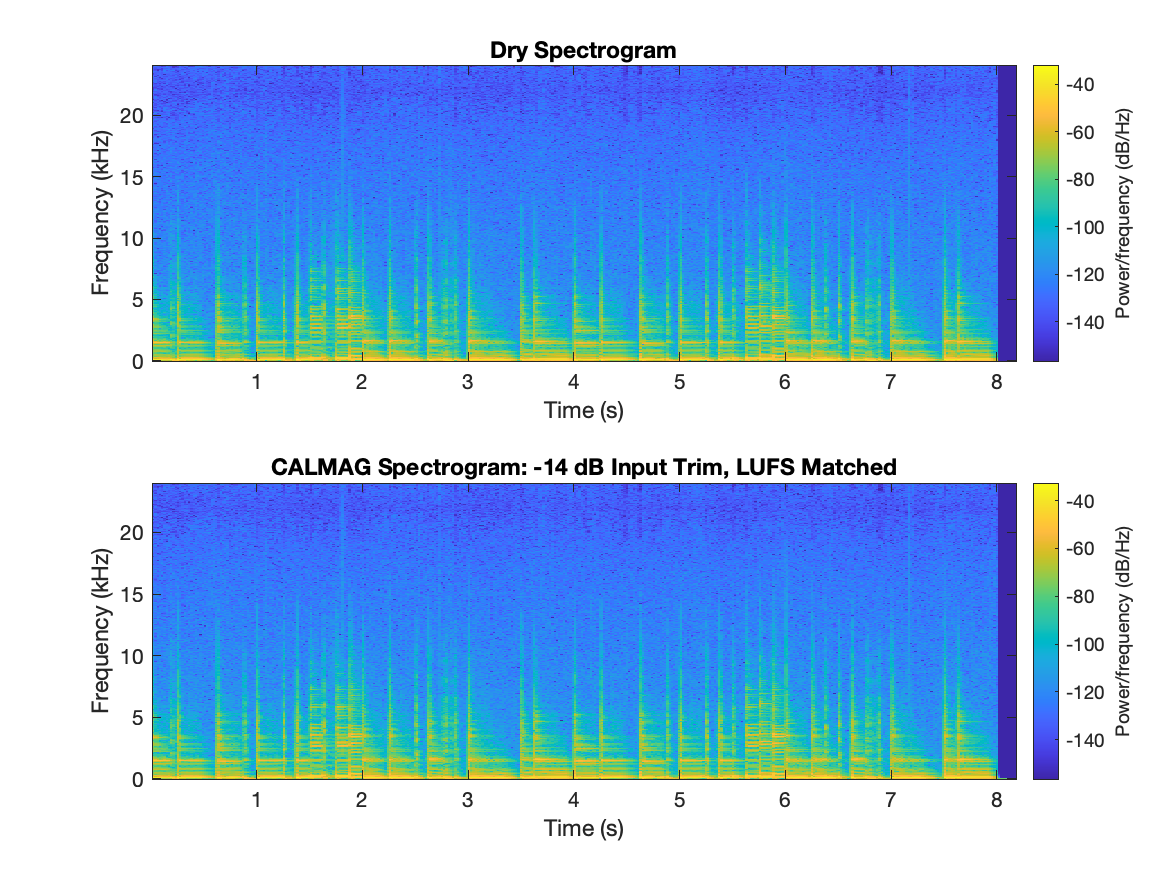
Spectrogram comparison showing similar harmonic identity with slightly increased temporal continuity between bass events.
Gated Synth
Signal-dependent behavior and preservation of intentional gating.
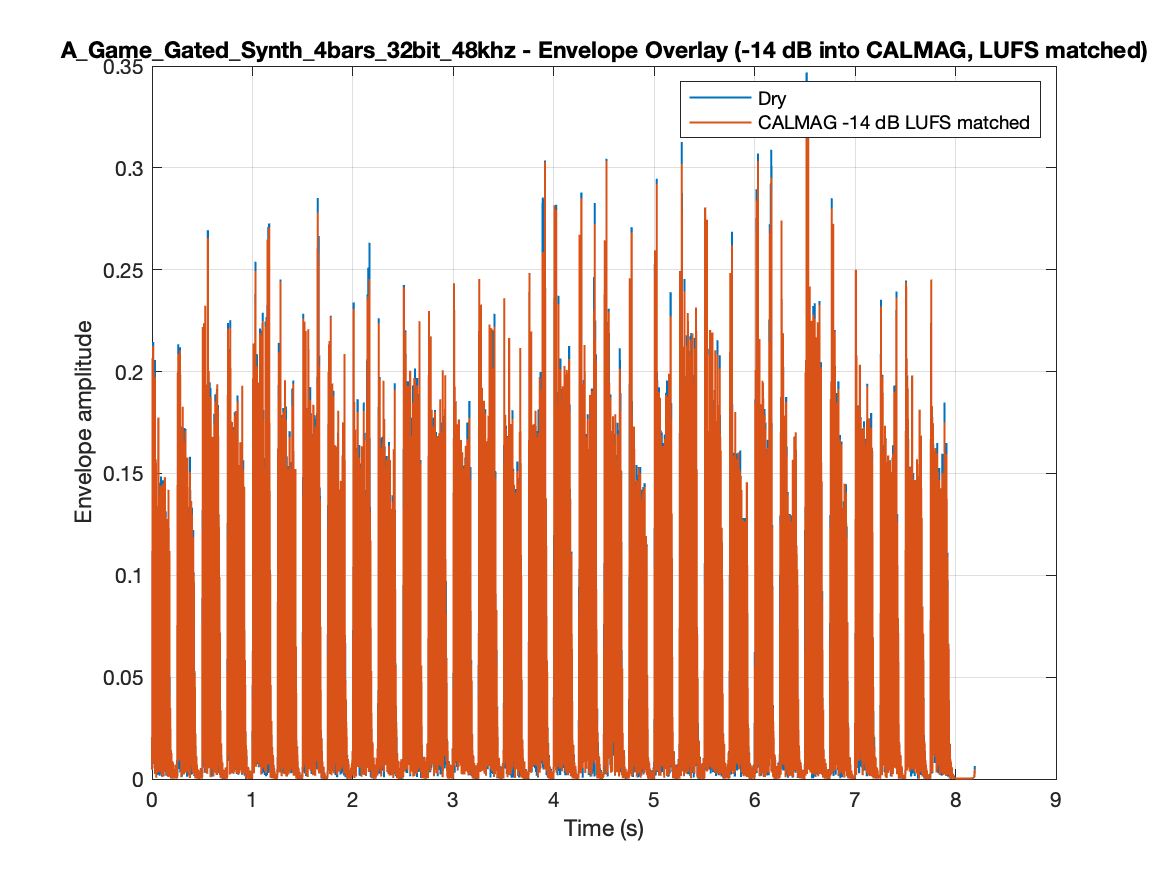
Envelope overlay showing that the intentional gated structure remains largely intact after CALMAG processing.
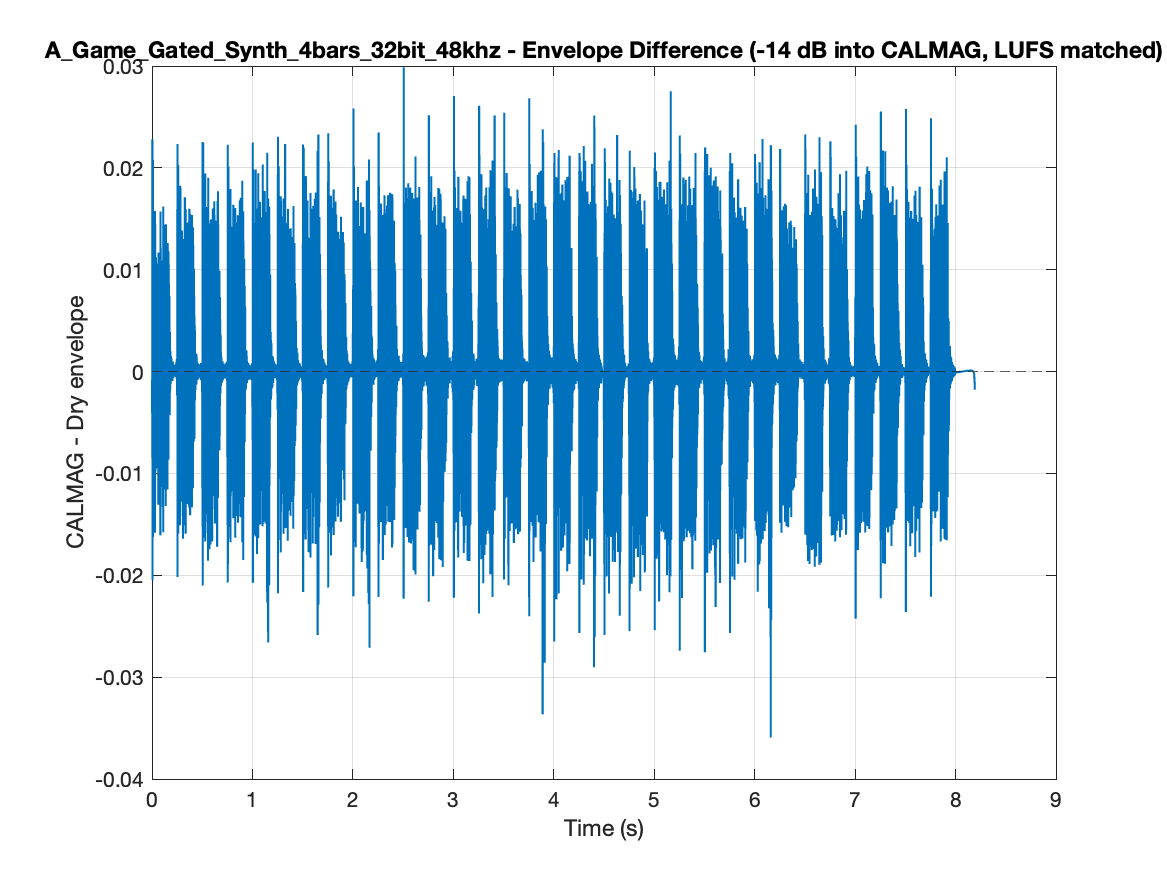
Envelope difference showing comparatively small deviations, supporting the observation that CALMAG does not impose the same response on every signal.
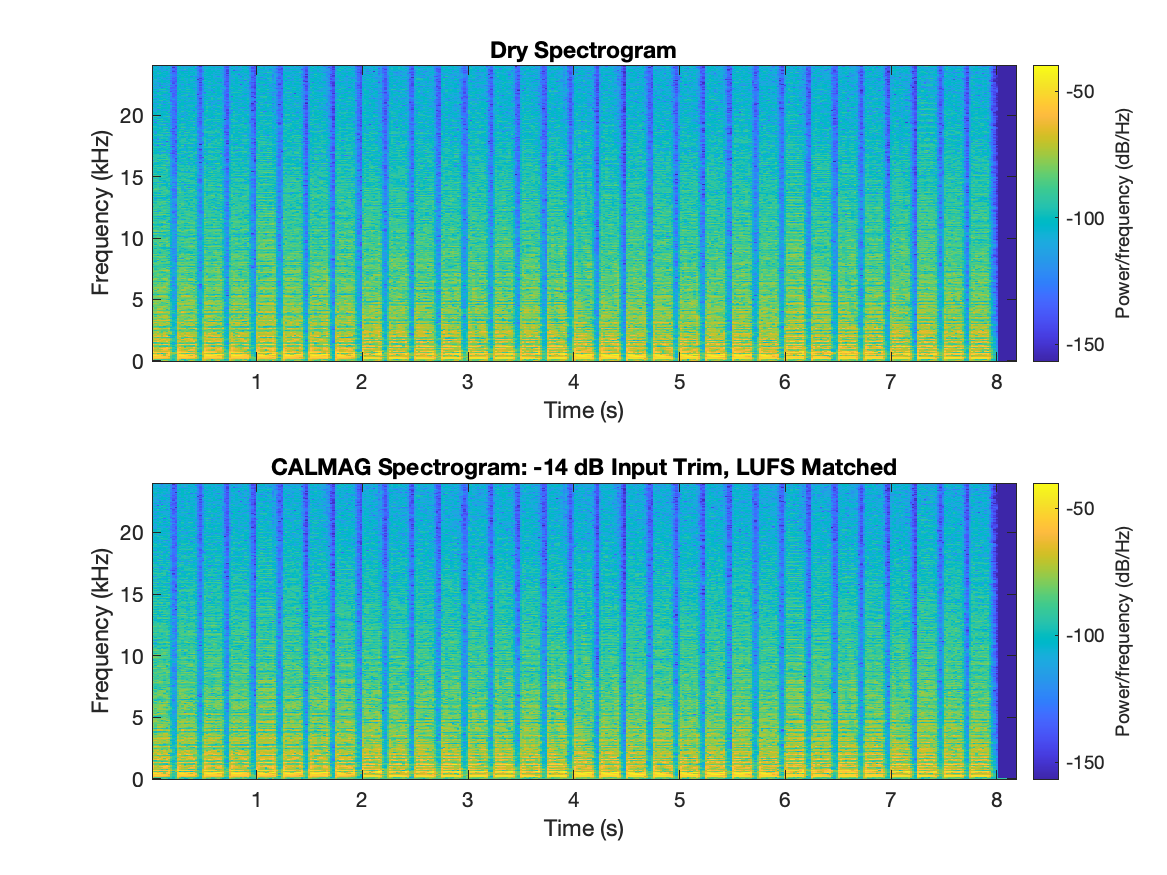
Spectrogram comparison showing preservation of the rhythmic gate pattern and spectral structure.
Amped Funk Beat
Rhythmic transient clusters and continuity between events.
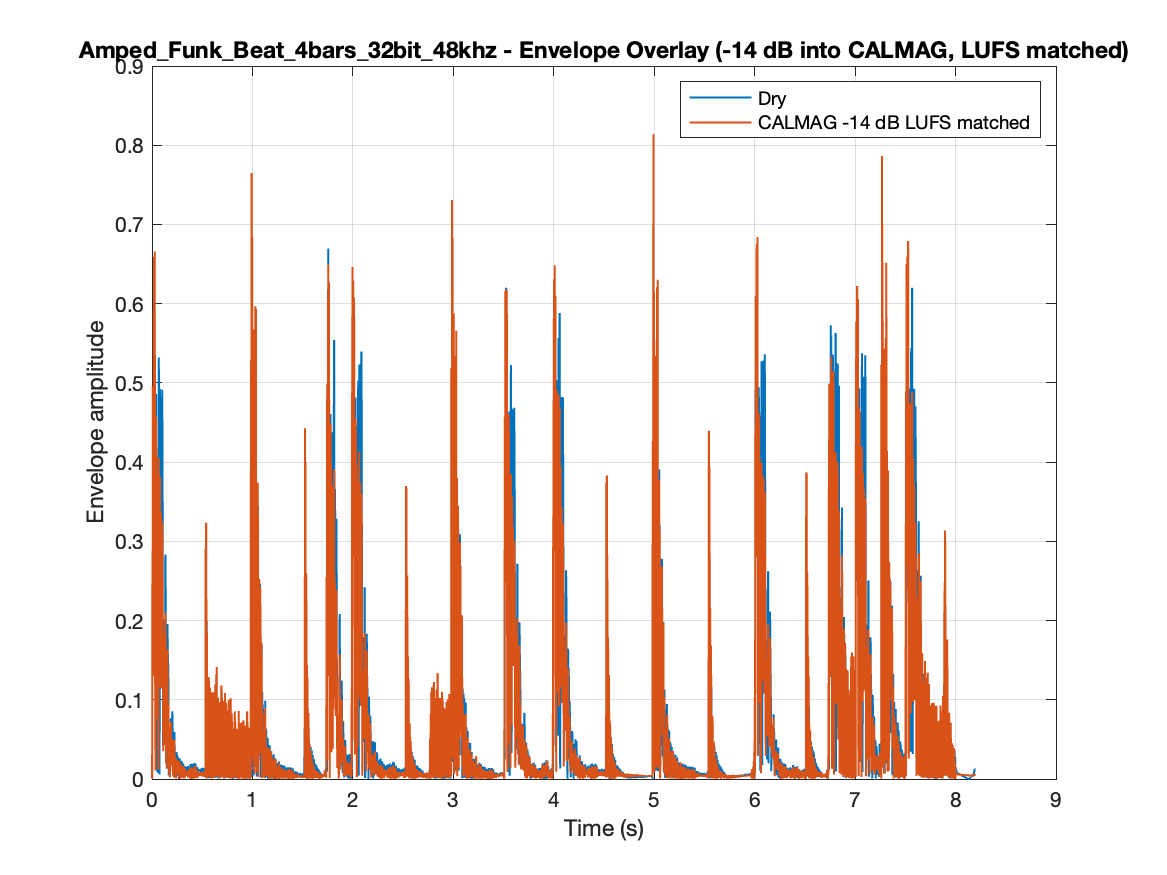
Envelope overlay showing transient events remain recognizable while some supporting energy persists between hits.
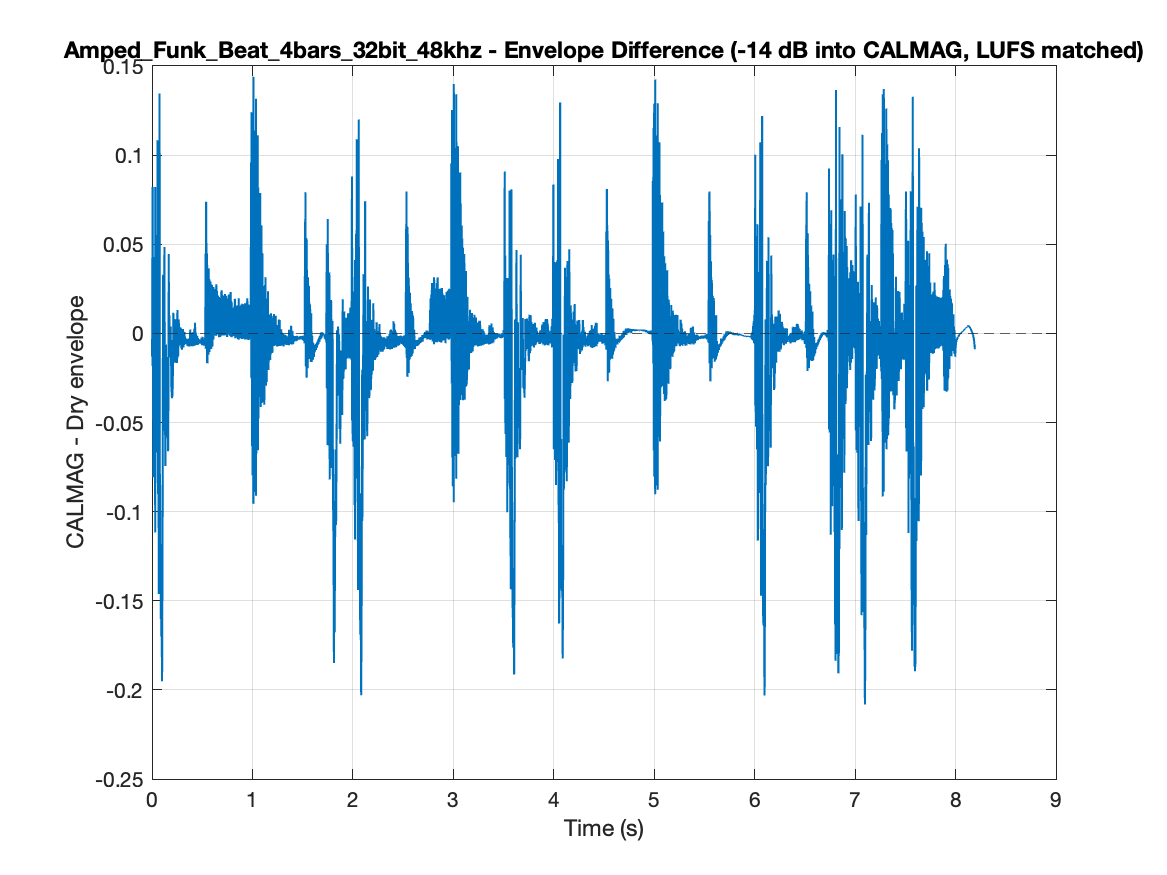
Envelope difference showing larger changes concentrated around rhythmic events and dense transient clusters.
Spectrogram comparison showing increased continuity without collapsing the beat into a smeared or flattened texture.
Chorus Rhythm
Selective persistence while preserving rhythmic gaps.
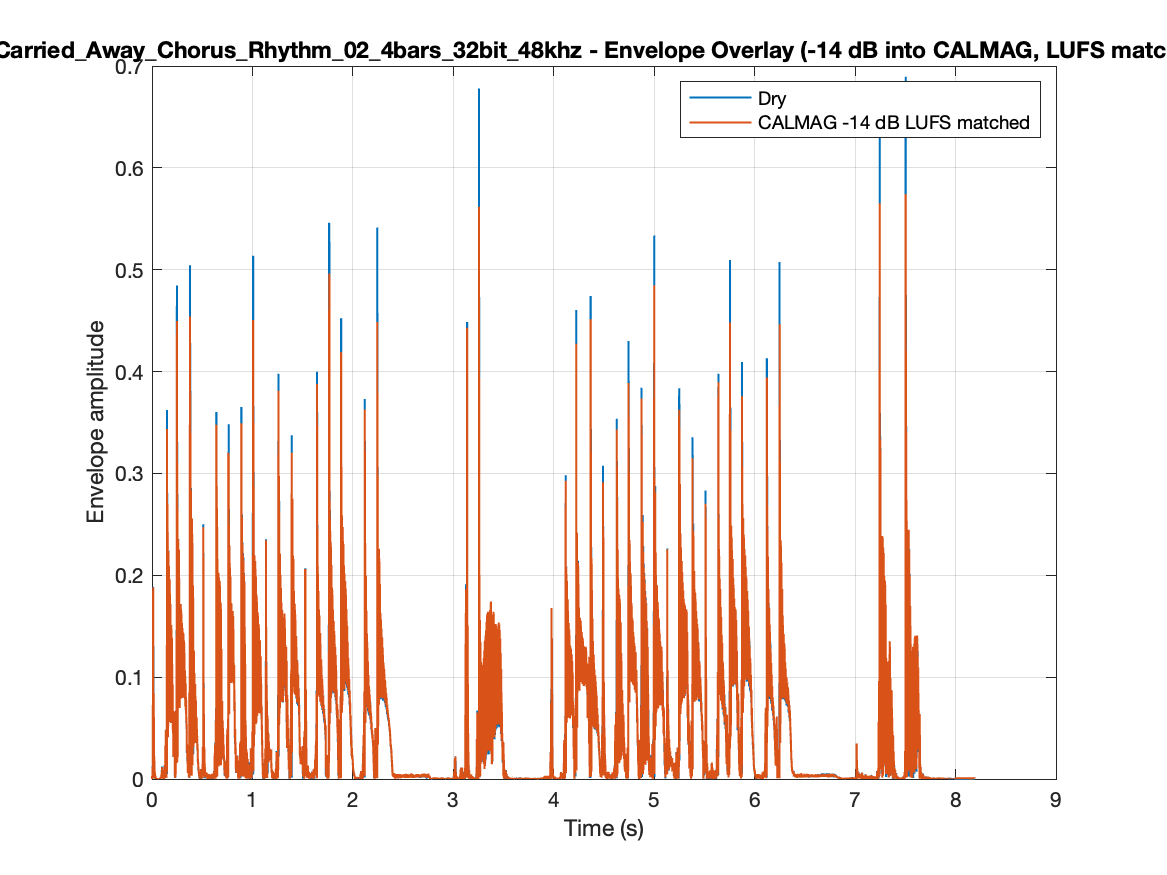
Envelope overlay showing added persistence around phrase events while the silent and sparse gaps remain visible.
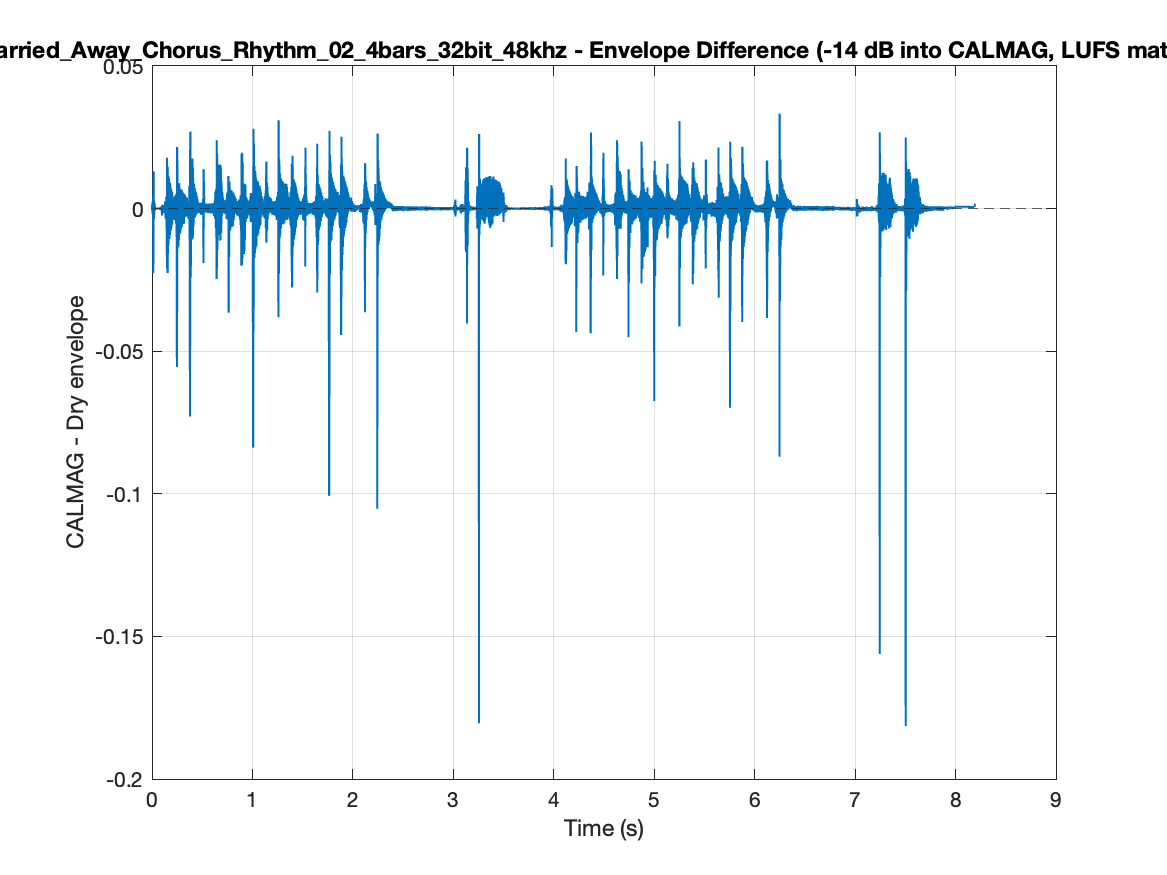
Envelope difference showing activity-dependent changes that recede during sparse sections.
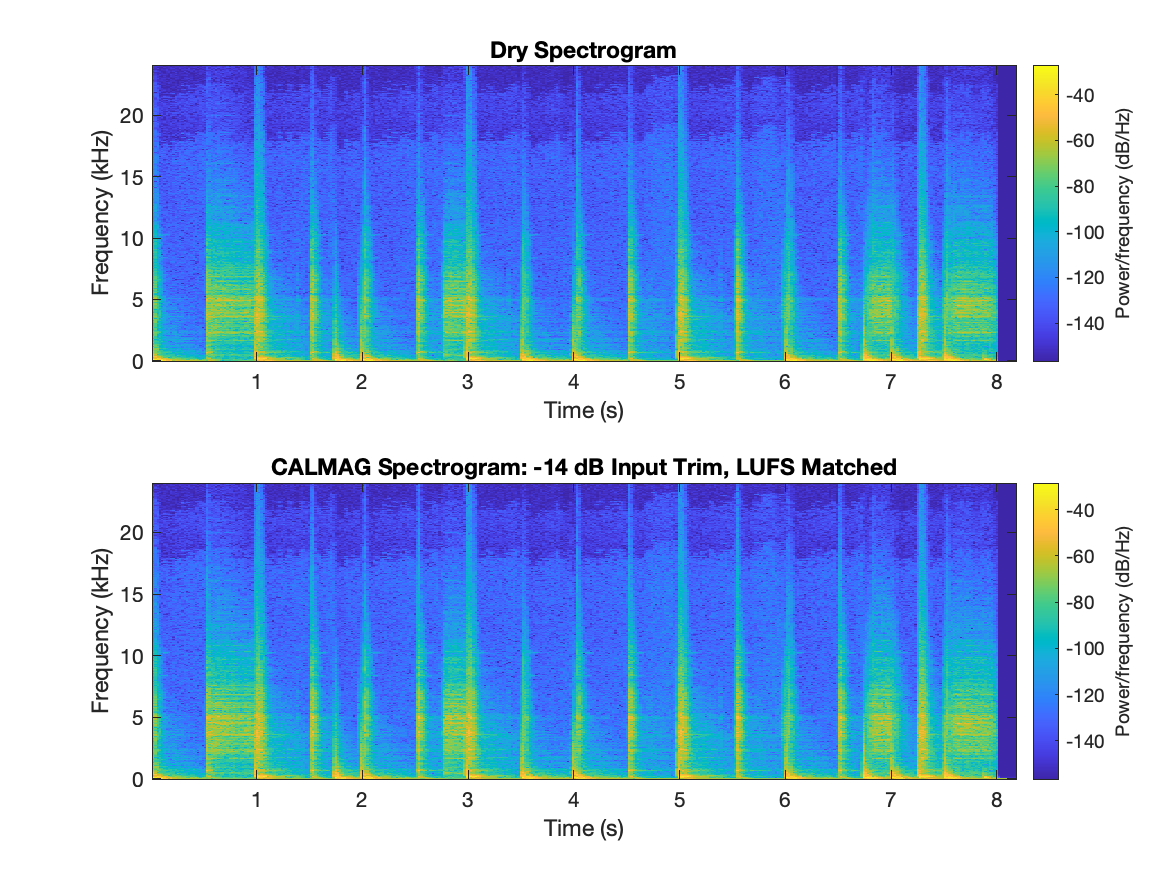
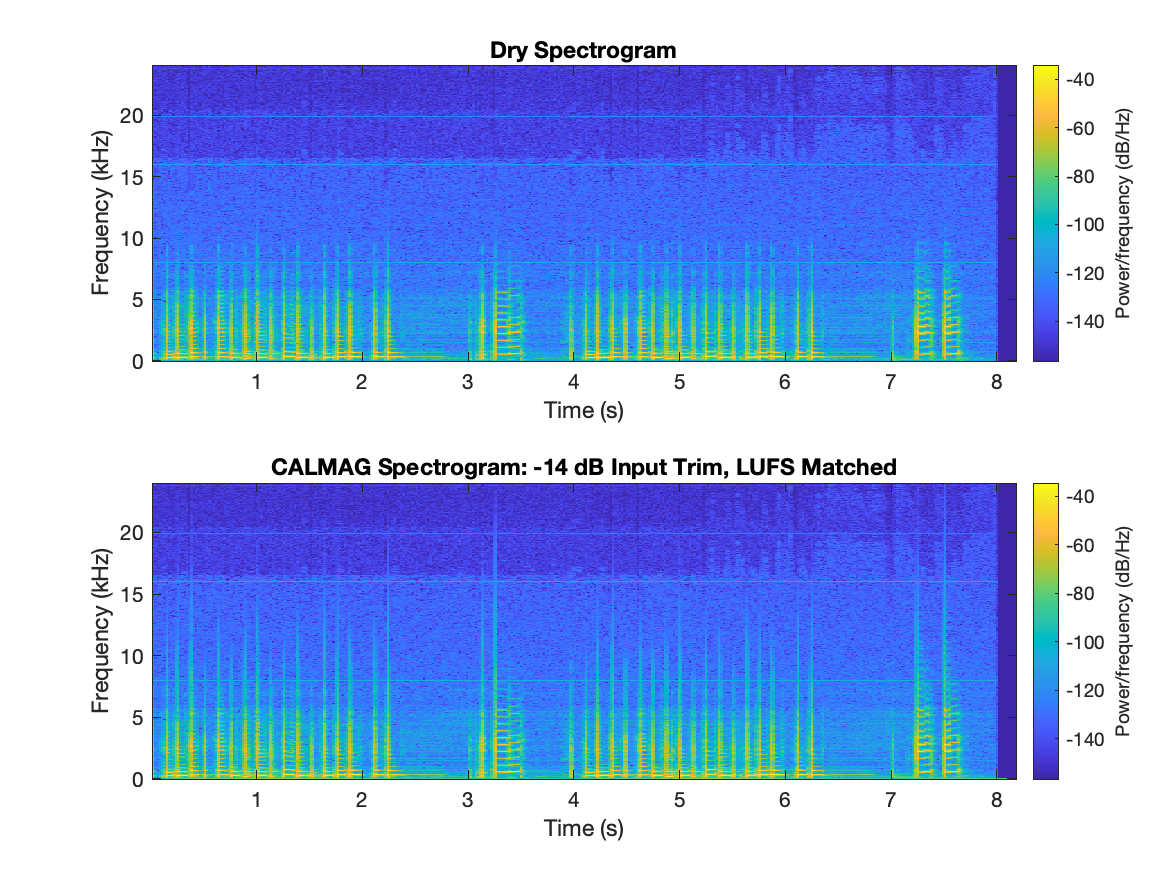
Spectrogram comparison showing selective continuity formation while preserving rhythmic separation.
Drum Shuffle
Transient preservation and event-scale recovery.
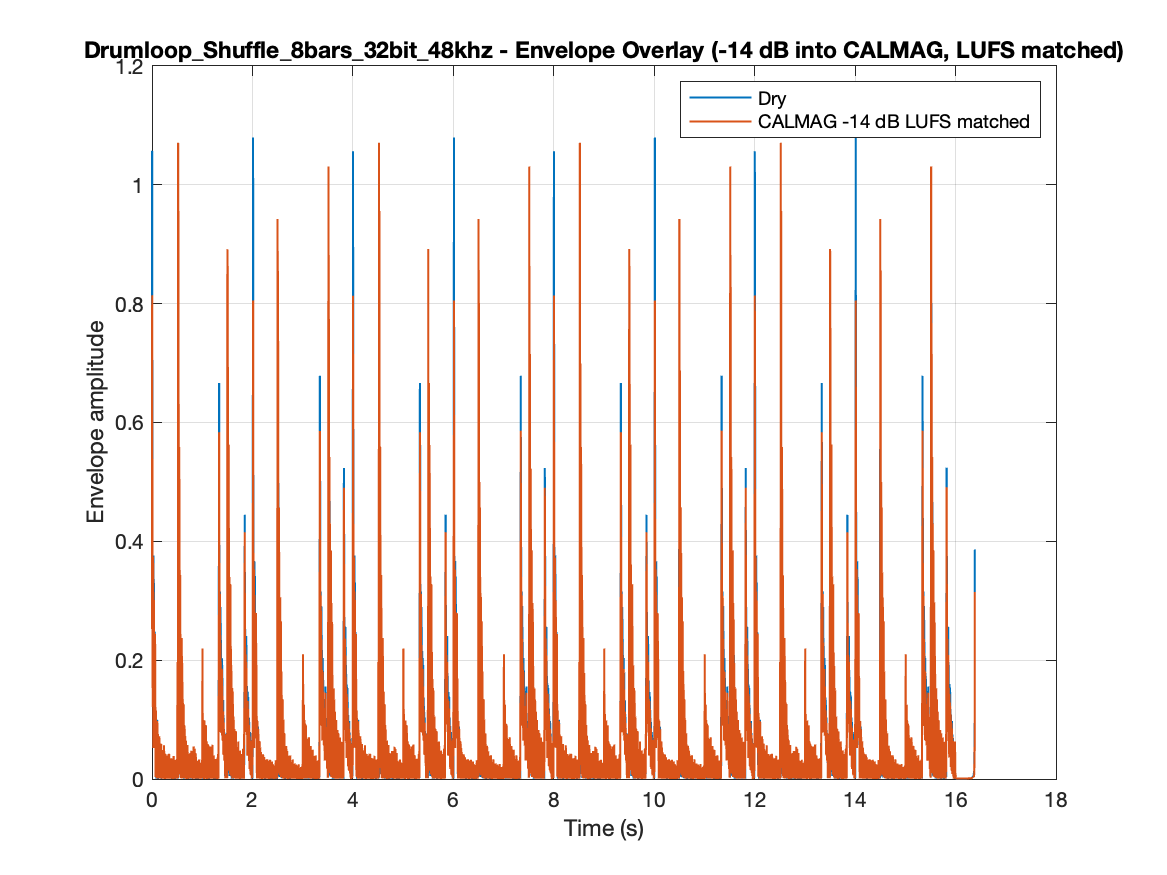
Envelope overlay showing shuffle timing landmarks and ghost-event structure remain intact after processing.
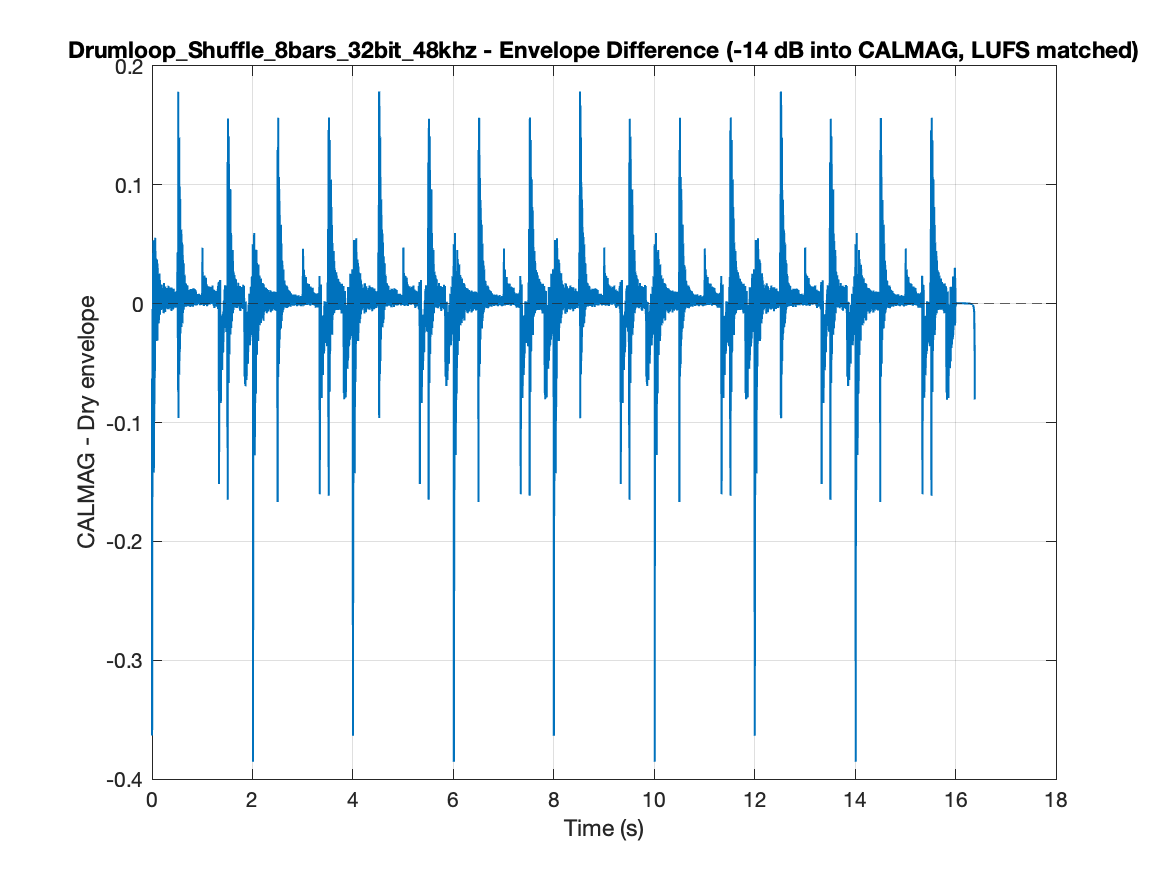
Envelope difference showing a repeated perturbation-and-recovery pattern across groove cycles.
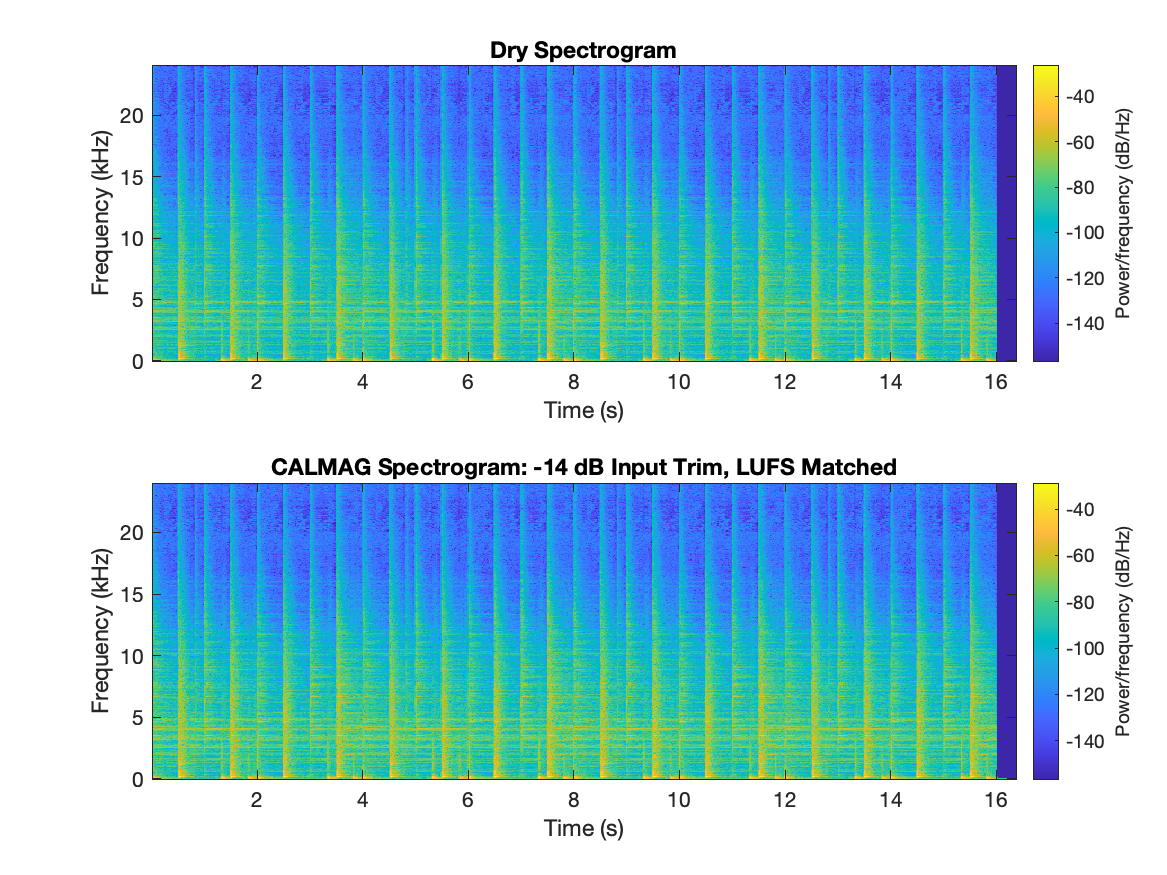
Spectrogram comparison showing preserved transient stripes with slightly fuller energy between events.
Phone Rage
Dense full-mix behavior and bounded response.
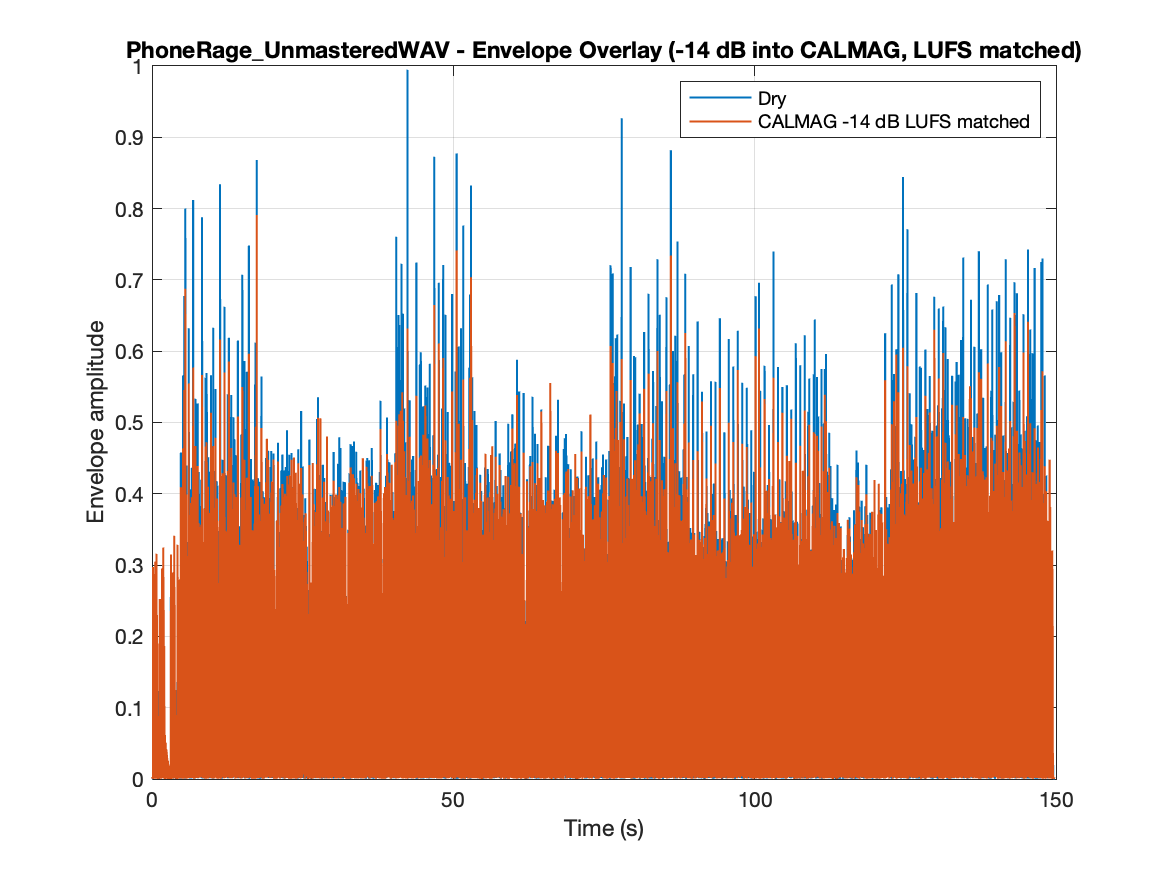
Envelope overlay showing full-mix macrostructure remains intact while CALMAG moderates and redistributes local event energy.
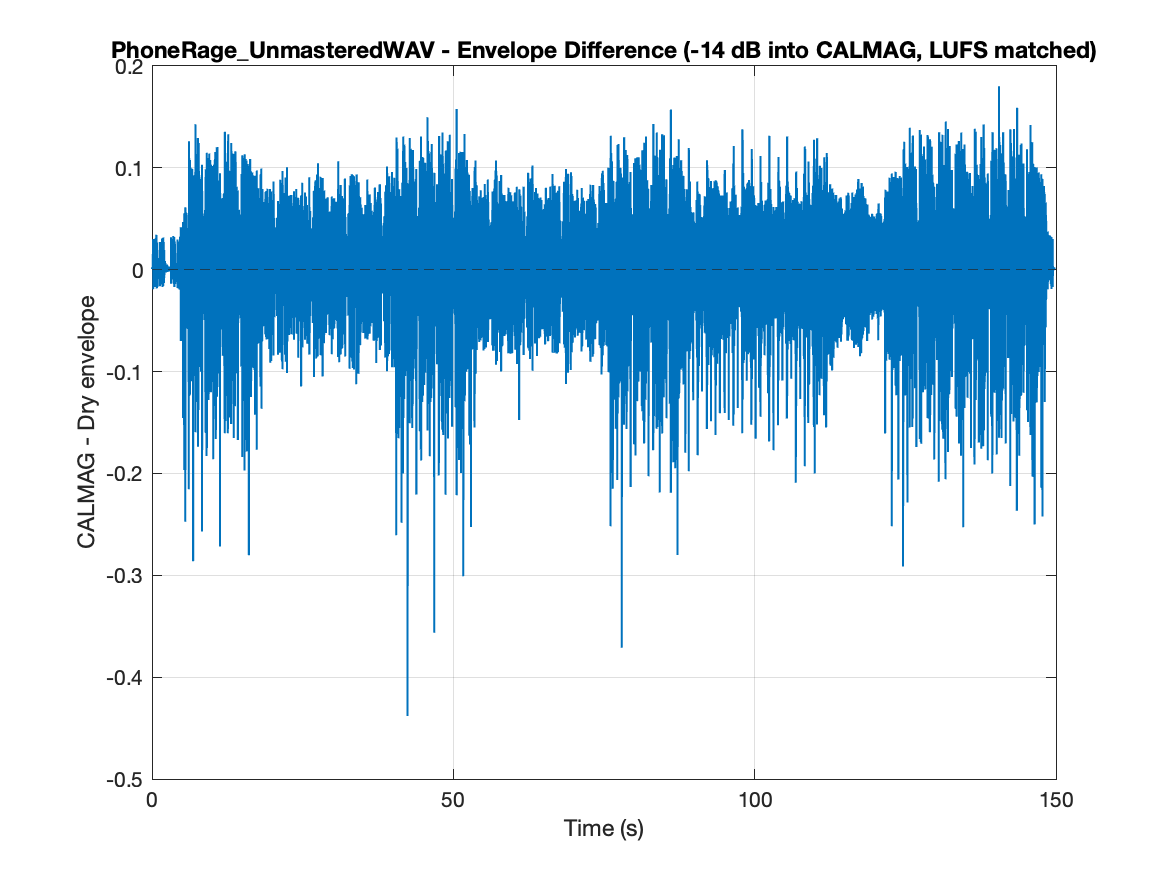
Envelope difference showing bounded behavior across dense program material without runaway accumulation.
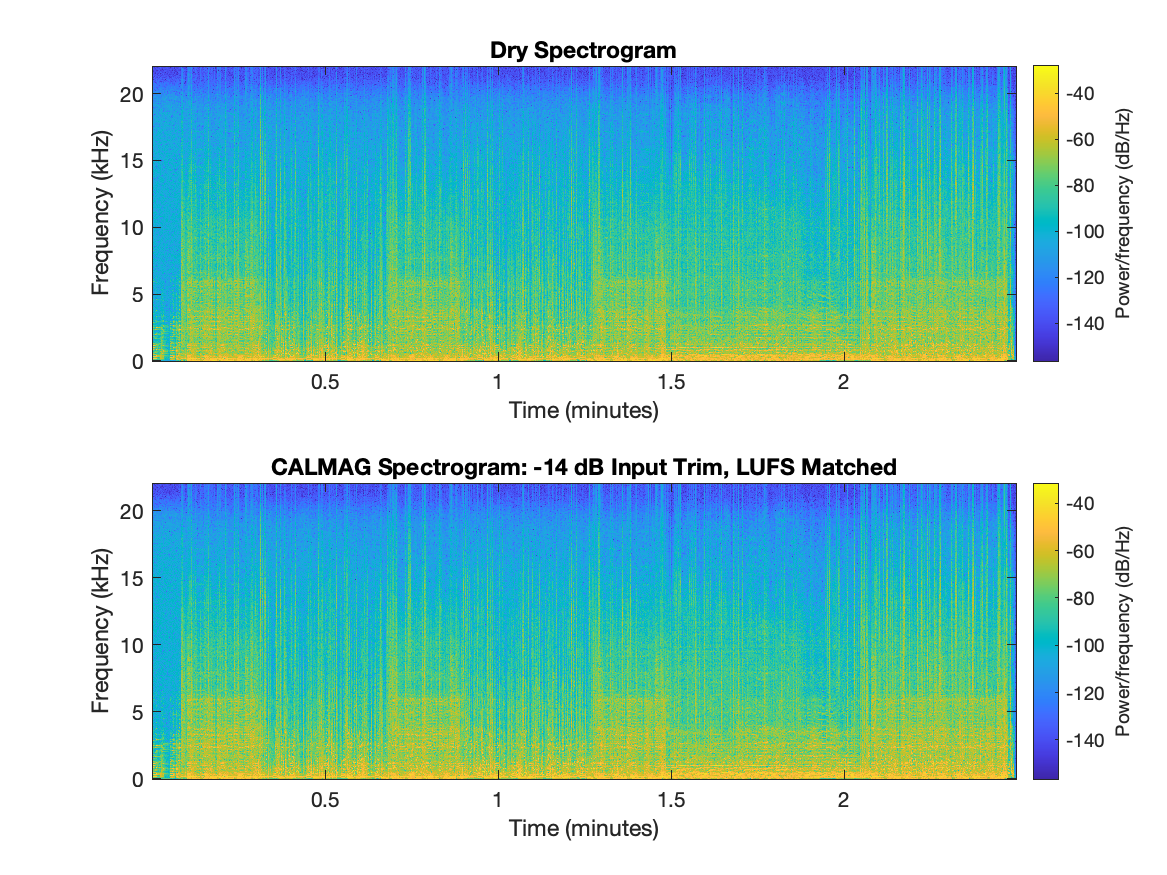
Spectrogram comparison showing dense mix behavior with preserved transient organization and no broad spectral collapse.
Bitch Is Paranoid
Long-duration stability across full-mix material.
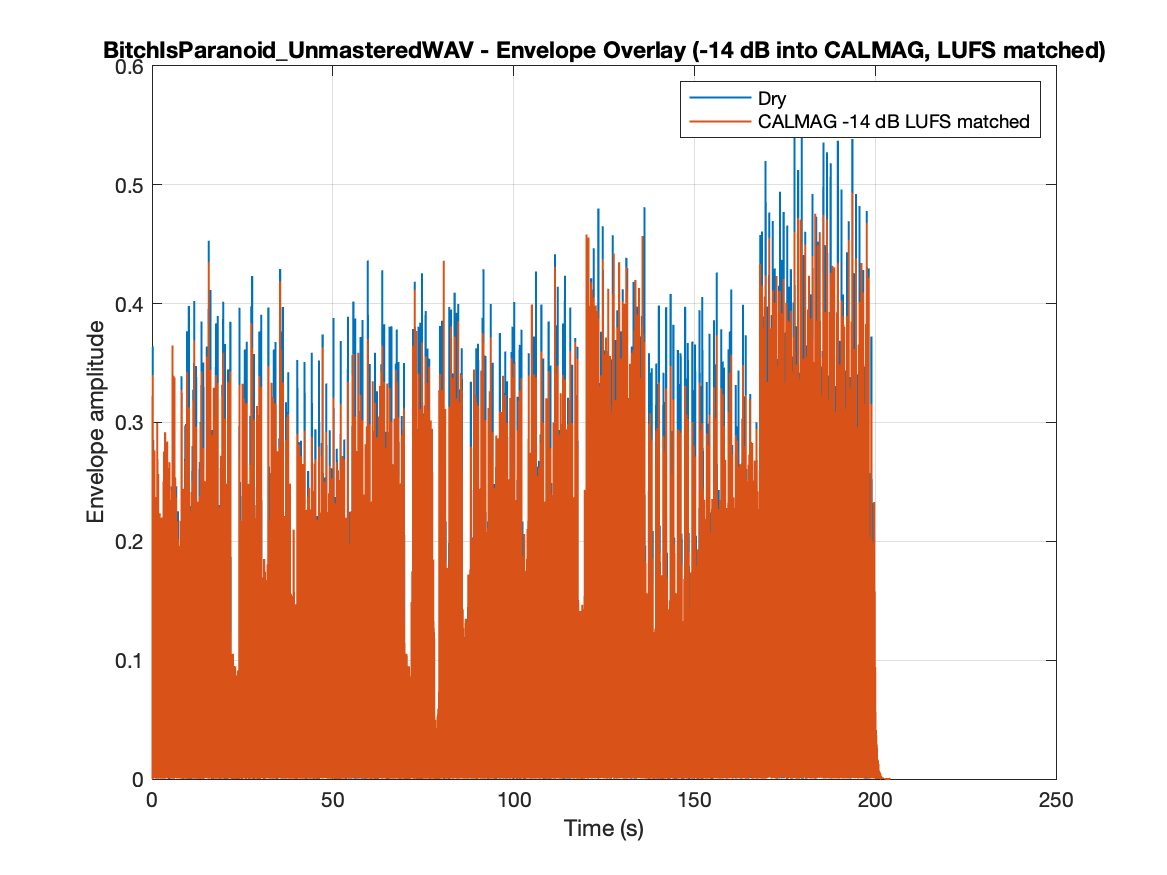
Envelope overlay showing arrangement-level dynamics and section contrast remain visible over the full duration.
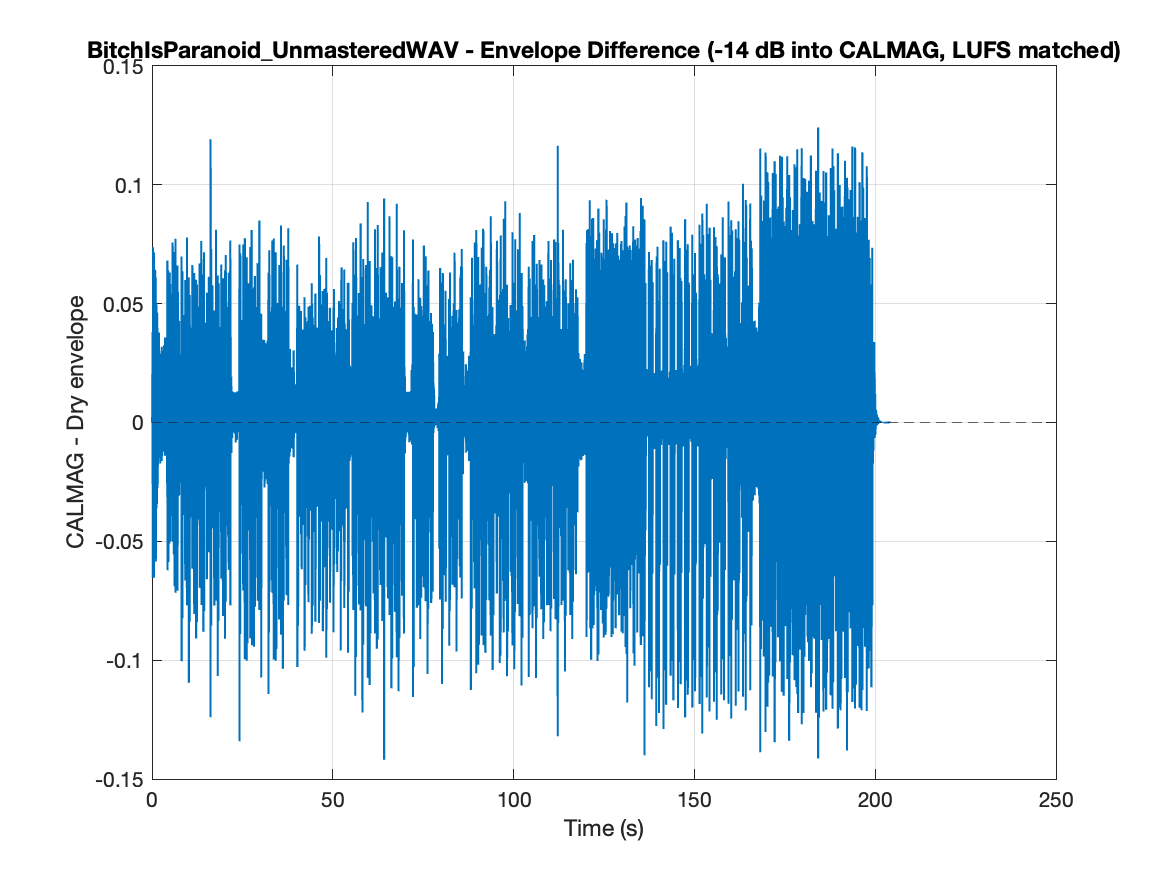
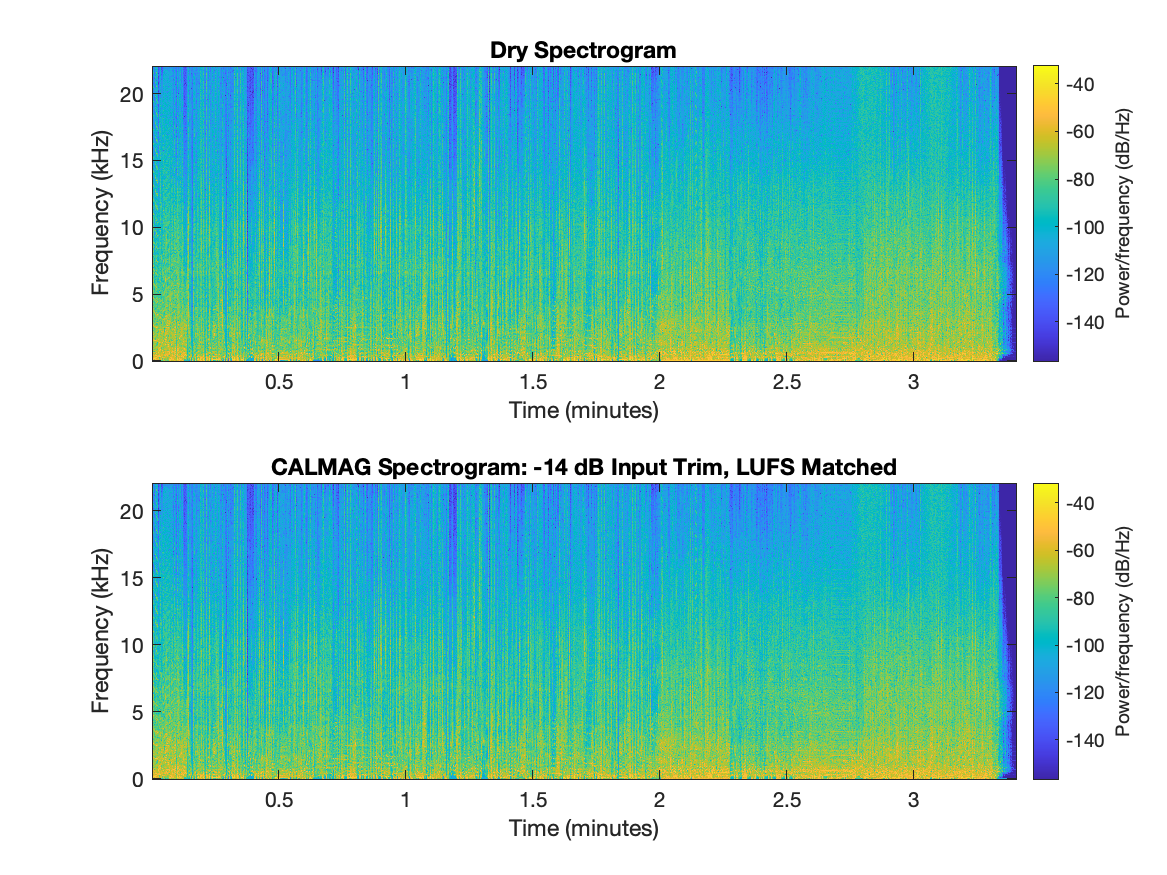
Envelope difference showing long-duration stability and bounded redistribution throughout the full mix.
Spectrogram comparison showing complex program material remains organized rather than turning into a uniformly elevated energy field.